
Protecting Raw Cards: Penny Sleeves, Top Loaders & What Actually Works
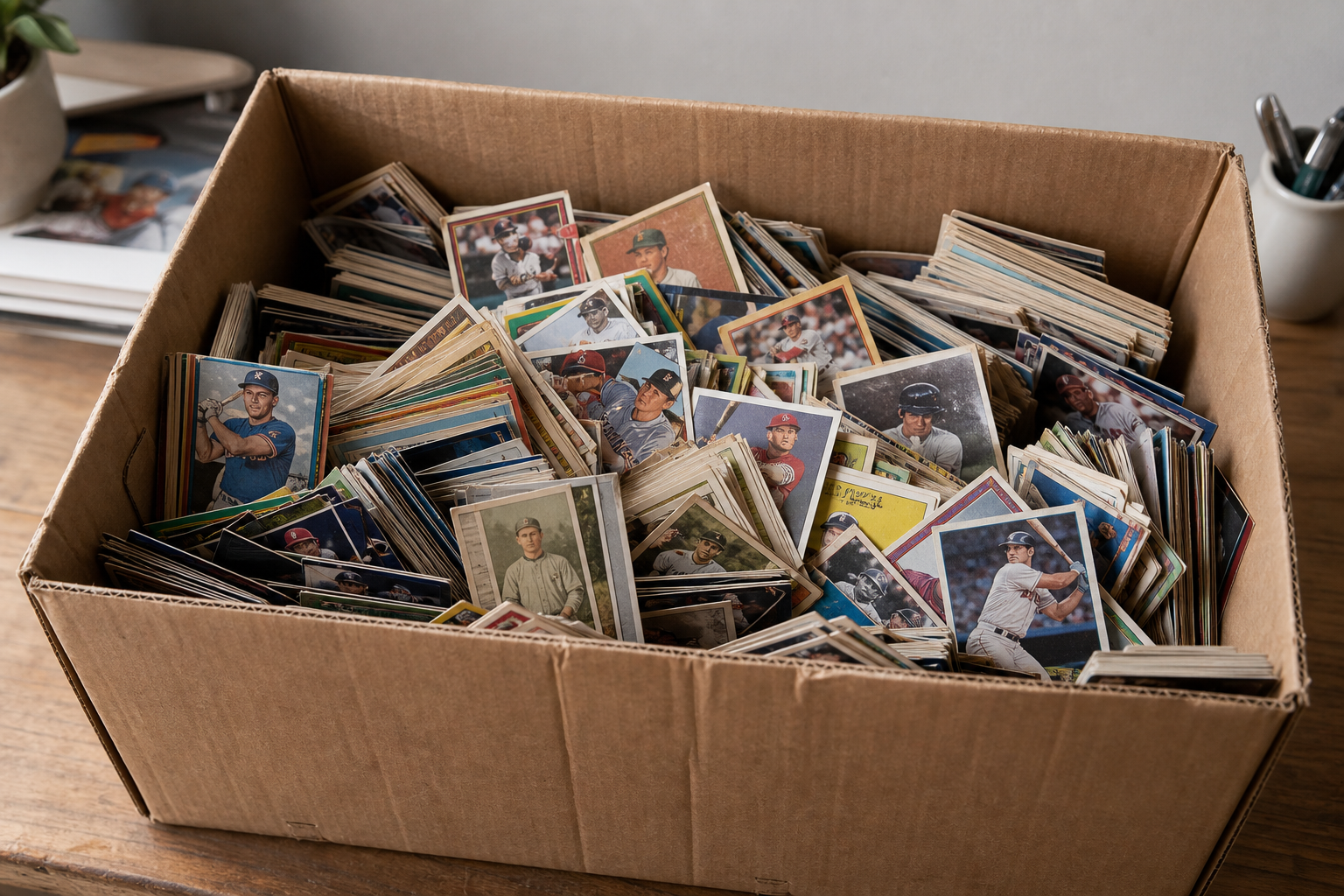
Almost every collection starts the same way: a cardboard box, a shoebox, or a stack of cards held together with a rubber band. It works — right up until it doesn't. Loose cards rub against each other, catch dust, soften at the corners, and pick up the kind of surface wear that quietly knocks a card down a grade before it ever sees a grader.
Raw cards (ungraded cards) are far more vulnerable than slabs, and protecting them well is cheap and simple. Here's the system that actually works.
Do raw cards really need protection?
Yes — more than slabs do. A graded card is sealed in a rigid holder; a raw card has nothing between it and the world. Every time loose cards shift against each other, they trade micro-scratches, dinged corners, and surface scuffs. On a chrome or prizm card, that surface wear is exactly what separates a gem-mint card from an average one. Protection isn't about being fussy — it's about not letting handling and storage erode value you can't get back.
What's the basic protection every raw card needs?
The standard is a penny sleeve inside a top loader — sleeve first, always. Slide the card into a soft polypropylene penny sleeve to guard against scratches, fingerprints, and dust, then drop the sleeved card into a rigid top loader that prevents bending and edge damage. The combo costs roughly twelve cents per card and is the minimum standard for anything you plan to keep, trade, or eventually grade.
The order matters: never put a bare card directly into a top loader, and never force a card in without a sleeve — that's how corners get dinged on the way in.
When should you upgrade to a one-touch holder?
For your higher-value cards — roughly anything worth $50 or more — step up to a magnetic one-touch holder. A one-touch is two halves of thick acrylic with magnets in the edges. You place the sleeved card in one half and press the other down until it snaps shut — no screws, no tape. Compared to a top loader, it fully encloses the card, uses thicker material, usually adds built-in UV protection, and looks far better on display.
Think of it as a tiered system: top loaders for the bulk of your collection, one-touches for the cards you care about most.
What materials should you avoid?
Avoid anything containing PVC, and don't trust standard sleeves to block UV. PVC-based plastics can break down over time and release chemicals that damage card surfaces, so look for sleeves and holders labeled acid-free and PVC-free — especially for scratch-prone chrome cards. And know the limit of basic supplies: ordinary penny sleeves and standard acrylic offer little to no UV protection (often under 50%), so cards displayed near a window or under lights will still fade. Direct sunlight can visibly fade a card in just two to three weeks, and that color loss is permanent. For display, look for holders rated 95%+ UV protection.
How should you organize raw cards for storage?
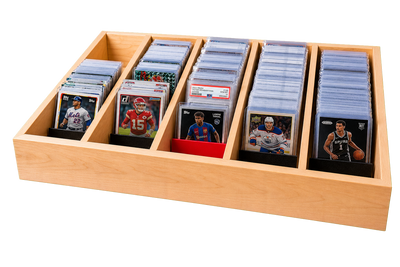
Sleeved-and-protected cards should stand upright in dividers, not lie in a heaped box. Once each card is in a sleeve and top loader (or one-touch), store them vertically so nothing presses down on the cards below and every card is easy to flip through. Keep them in a cool, dry, dark place — the same conditions that protect slabs apply here. Our guide to humidity, light, and temperature covers the environment in detail, and our capacity guide helps you plan space as the collection grows.
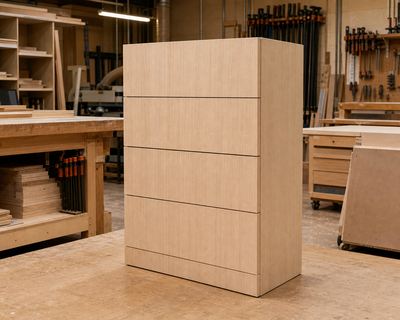
This is the difference between a collection that ages well and one that slowly degrades in a box. An Apex Archive cabinet is built for exactly this — adjustable dividers hold sleeved cards and top loaders upright, soft-close drawers keep everything still, and the whole thing is made to live in your space, not your closet. When the shoebox era is over, you can design the cabinet that replaces it.
More guides
Build a home for your collection.