
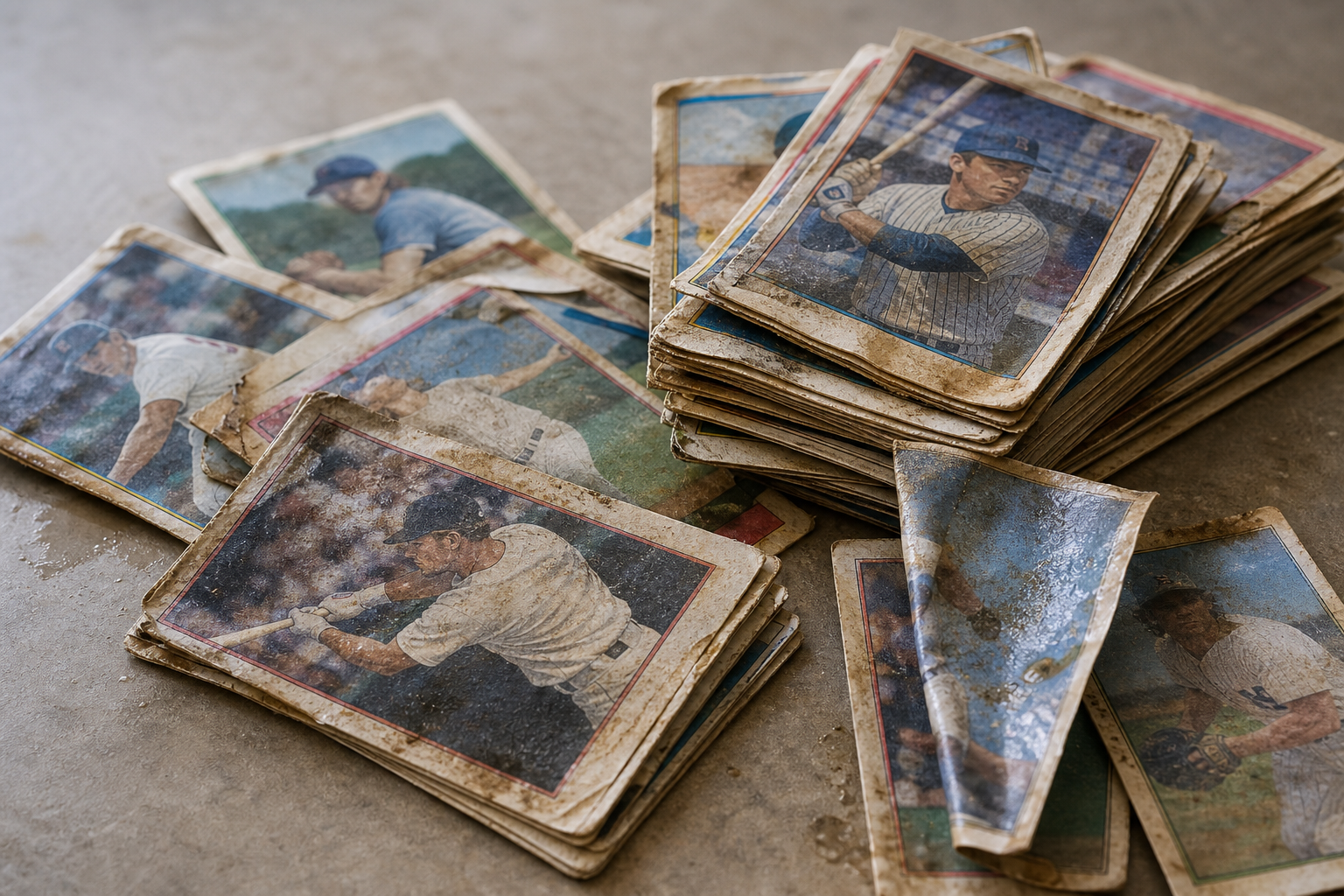
Humidity, Light & Temperature: The Silent Enemies of a Card Collection
Most card damage isn't dramatic. It isn't a spilled drink or a bent corner. It's slow, invisible, and environmental — the gradual warping, fading, and yellowing that happens to cards kept in the wrong conditions for months or years. By the time you notice, it's already done, and most of it can't be reversed.
The good news: the three things that quietly destroy collections — humidity, light, and temperature — are all controllable once you know the targets.
What's the ideal temperature and humidity for storing cards?
Aim for 40–55% relative humidity and a steady 65–75°F (18–24°C). That isn't a guess — it's essentially the same standard museums use to preserve paper. Above about 60% humidity, cards warp, foil curls, and mold becomes a real risk. Below about 30%, cardstock turns brittle and prone to cracking. Temperature and humidity are linked, too: heat holds more moisture, which is why hot, damp spaces are the most destructive of all.
Why does consistency matter more than hitting a perfect number?
Because repeated swings stress cards more than a steady, slightly-imperfect environment does. Every time the air moves from humid to dry or hot to cold, cardstock expands and contracts a little. Do that thousands of times and you get warping and loosened surfaces. A room that holds a stable 68°F and 50% humidity year-round is far kinder to a collection than one that's "perfect" on average but bounces between extremes. Stability is the goal.
How damaging is light, really?
More than most collectors realize — and the damage is permanent. Cards in direct sunlight can visibly fade in as little as two to three weeks, with reds and yellows going first. Under fluorescent lighting it's slower, but still measured in months. Once pigments break down, no treatment brings them back; once cardstock yellows from UV, it can't be bleached back to white. Glossy and foil finishes lose their pop, too. LED lighting emits far less UV than fluorescent or incandescent, which makes it the better choice for any display — but the safest place for cards you're not actively viewing is out of the light entirely.
Where in your home should you keep cards?
In an interior, climate-stable room — never an attic, basement, or garage. Those three spaces are exactly where collections go to die: attics bake, basements grow damp, and garages swing through both extremes daily. A living space inside your home's climate envelope, away from windows and exterior walls, holds the steady temperature and humidity your cards need. If you can be comfortable in the room year-round, your cards generally can be too.
What about the storage furniture itself?
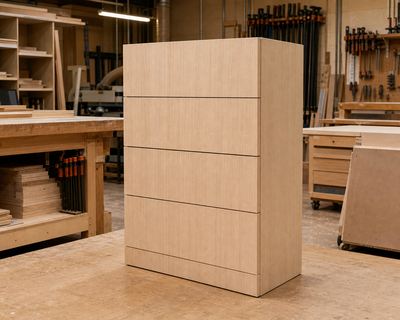
Closed, enclosed storage does a lot of the environmental work for you. Cards kept in closed drawers are shielded from direct light, dust, and the day-to-day air movement that dries cards out or exposes them to spikes in humidity. That's a big part of why a proper cabinet beats open shelves or a stack of boxes: it creates a calmer micro-environment around your collection. Pair that with the right room and you've removed nearly every environmental threat.
Every Apex Archive cabinet is built as enclosed, soft-close, furniture-grade storage meant to live in the climate-controlled rooms where collections belong — so your cards stay dark, still, and stable. See how the pieces fit together in our guide to storing graded cards and our look at building a collection room, or design your own cabinet when you're ready.
More guides
Build a home for your collection.